
In Marrakech, you will find many historical sites. Saadien Tombs Marrakech is another beautiful historical gem hidden beneath the red walls of Marrakech. These tombs were named after the influential Saadian Dynasty in Morocco. They ruled Morocco from 1500 to 1600. During the reign of the Saadien Dynasty, many economic, artistic, and political development projects were introduced in Morocco. Ahmed Al-Mansour, a brave figure of the Saadien dynasty built all these tombs as a royal burial place that could reflect the prestige, wealth, glory, and power of his family. Let’s have the details behind the story of the Saadien Toms.
What are Saadien Tombs? Why were they built?
The Saadien Dynasty believed that their rulers deserve a comfortable and royal resting place. They did not want to bury the members of the royal family like an ordinary man. So they built tombs to bury all the sultans, Princes and princesses, and royal nobility.
Another purpose behind the building of the tombs is to showcase the power, wealth, and legacy of the royalties to the world. The Saadien Dynasty was mighty and won many battles, including the Battle of Alacer Quibir. Moreover, the people of the Saadien Dynasty were Muslims. In Islam, honouring the dead bodies is very important. So the family members wanted their ancestors to be buried with dignity. That is the reason why they built a sacred place that their generations would remember.
The mystical story of the Saadien
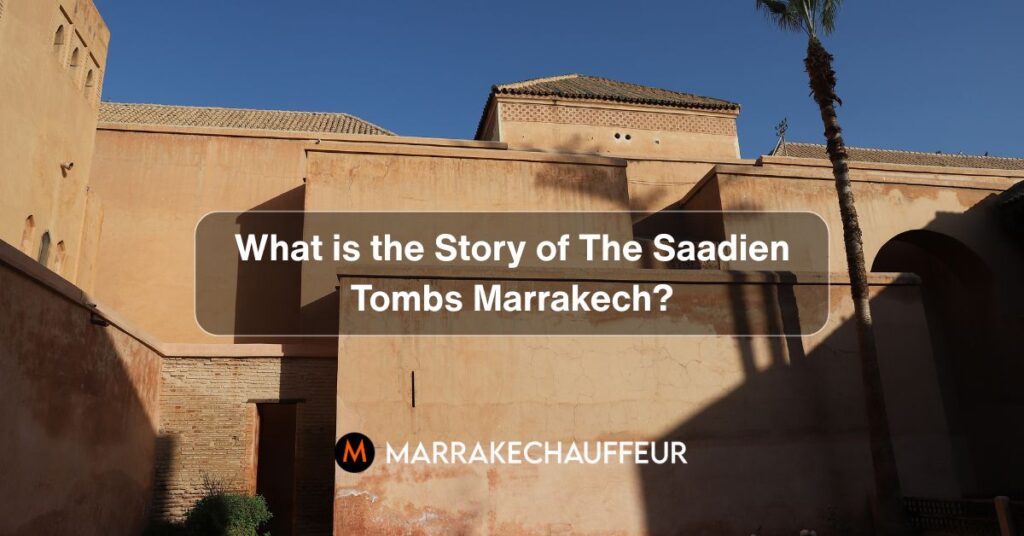
One of the most mystical aspects about this tomb is that it was kept hidden from the local people for around 300 years. This tomb was kept hidden purposely by the rivals of the Saadien dynasty. After the fall of the Saadien Dynasty, the Alaouite Dynasty took hold of Morocco, and that is why they wanted to erase the history of the Saadien Dynasty. So instead of demolishing the tombs, he decided to block them off with massive walls, hiding them from public view. For years, people could only see the tops of the palm trees from outside, but no one knew what was behind the walls.
The discovery of Saadien Tombs in 1970
After the French took over the hold of Morocco, Saadien Tombs Marrakech were rediscovered by French officials when they arrived. They were amazed to find the beautiful marble tombs with gold Arabic calligraphy, beautiful cedar wood carvings, and the extraordinary interior of the tombs. Saadiens kept everything in such a manner that it seemed untouched or preserved. Once rediscovered, it became one of the most historically significant sites in Morocco.
The Division and Compartments of Saadien Tombs
These tombs reflect the masterwork of Moroccan authentic architecture, blending Islamic culture and influence. In the tomb, you will find different sections, chambers, and courtyards, each holding its own significant detail. Here is the division of sections.
The Main Mausoleum
The basic structure of Saadien Tombs Marrakech is known as the Mausoleum. It consists of 12 columns. This primary hall is considered the crown of the entire complex. This chamber dates to the time of Sultan Ahmed Al-Mandour, the most famous Saadien ruler. In the main mausoleum, you will find the following features:
- 12 beautiful marble columns
- Floral engraving everywhere around the tomb
- Honeycomb black ceiling work.
- Wooden screens from the natural and radiant light reflect
- Beautiful embellishment of the dome with gold and stunning marbles.
The chamber of the three Niches
This section was devoted to the Royal children of the high-ranking families. This section is full of beautiful geometric motifs, marble carvings, and soft lighting, creating an attractive, spiritual atmosphere.
The garden courtyard
As the name suggests, it’s a beautiful courtyard outside the mausoleum. It’s a very peaceful garden full of palm trees in square plots. This courtyard is dedicated to the faithful and loyal soldiers. Here, you will find beautiful traditional Moroccan designs throughout the pathways.
Zellige tile work
Saadien Tombs Marrakech is known for their remarkable Moroccan craftsmanship. They have vigilantly used each material for the construction of the tombs. Most of the domes’ floors are covered with colourful mosaic patterns known as zellige. These patterns are symbols of spirituality, eternity, and the essence of the stomach.
Cedarwood carvings
Most of the frames, ceilings, and doors are carved from cedar, which is further adorned with floral motifs. The smell of this wood makes the chambers lively and active.
Calligraphy
On the walls of the tombs, you will find many Quranic verses written with stucco. The purpose was to maintain the religious essence.
Imported marble
Most of the marble used in the construction of these tombs is imported from Italy. It also reflects the wealth of the Saadien dynasty and their trade connections beyond the African region.
How to visit Saadien Tombs Marrakech?
Many tourists just consider these tombs a quick stop and skip most places meant to be explored in depth. The tombs are located in the Kasbah district of Marrakech. It’s near the Kasbah mosque, so the entrance is narrow. It opens up into a courtyard, but people often confuse it. Therefore, you must have a tour guide or a chauffeur with you. If you hire a driver from Private Driver Morocco, they will drop you right in front of the corridor for your convenience.
Opening hours
This site is usually open early in the morning. You can visit between 9 a.m. and 5 p.m.
Ticket price
To visit these tombs, you have to pay an entry fee of around 20 to 30 MAD. Given the very affordable cost, you will find many history lovers.
Why do the Saadien Tombs even matter today?
Despite dating back to far-off times, they are still considered an essential part of Marrakech’s monuments. The spiritual, emotional, and political connections of Saadien Tombs keep this place alive. Although people tried to erase its history, they were unable and now it has become a significant part of Moroccan cultural identity.
Essential Details about the Saadien Tombs
All these tombs are aligned geometrically and spiritually. The division and sections of Mausoleum, the central courtyard, and then three represent Islamic cosmology. The presence of 12 columns in the whole significantly relates to completeness in Islam. The layout of the garden reflects the idea of paradise and a mausoleum, with the golden ratio.
- These tombs were built using material that had never been used for sites in Marrakech.
- Some graves are kept empty purposelessly.
- The ventilation system of the tomb room is hidden
Conclusion
Saadien Tombs Marrakech stands among the most captivating historical sites of Morocco because of their significant history and symbolic nature. The connection of the Saadien ‘s with Islam and their power shocked everyone and they stood as a glorified dynasty, which remained mystical for a long time. The remarkable preservation of Moroccan architectural heritage in these courtyards and chambers reflects Morocco’s royal history.

